Medical disclaimer: This article is for general information only. It is not medical advice, and it does not diagnose or treat any condition. ADHD and anxiety should be assessed by a licensed healthcare professional. Prescription medicines require a valid prescription after a consultation with a licensed prescriber. Do not start, stop, or change any medicine on your own.
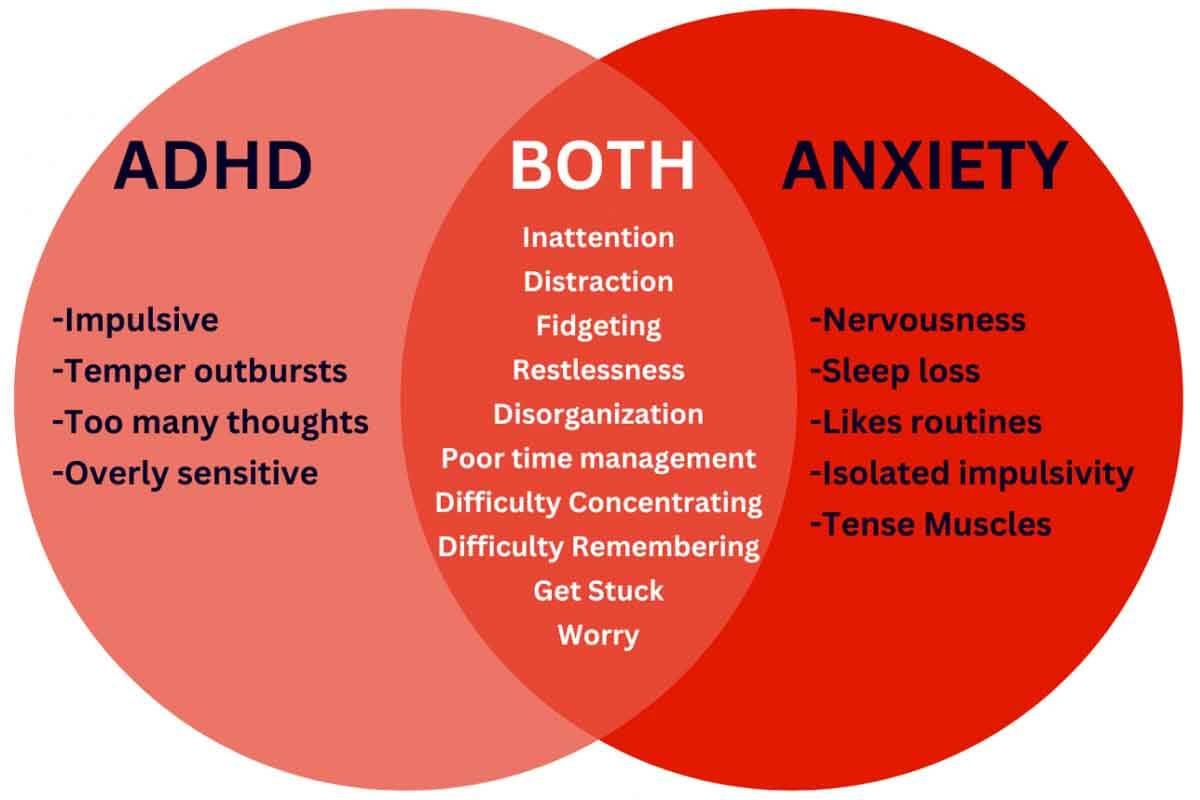
ADHD and anxiety often appear together, and they can look surprisingly alike. A person may find it hard to concentrate, feel restless, sleep poorly, and become easily frustrated. Those experiences could come from ADHD, from anxiety, or from both at once. That is why the overlap between ADHD and anxiety can be confusing for the person living with it, for families, and sometimes even for clinicians at a first appointment.
Understanding the overlap matters. When both conditions are present, each one can make the other harder to manage. When only one is present, treating the wrong one can leave the real problem untouched. This guide explains how common the overlap is, why it happens, how the symptoms compare, and how clinicians tell the two conditions apart. It also covers medication, non-drug support, and what to tell your clinician at an appointment.
How Common Is the Overlap?
Anxiety is one of the most common conditions to occur alongside ADHD. In the U.S. National Comorbidity Survey Replication (NCS-R), about 47.1% of adults with ADHD also had an anxiety disorder in their lifetime (Kessler et al., 2006). In other words, nearly half of the adults with ADHD in that large national survey had also experienced an anxiety disorder.
Other studies report lower or higher figures, depending on the age group, the type of anxiety studied, and how people were recruited. Reviews commonly report that about 25% to 50% of children and adults with ADHD also have an anxiety disorder. The exact figure varies, but the pattern is consistent: anxiety is far more common in people with ADHD than in the general population.
That does not mean ADHD causes anxiety in every case, or that anxiety causes ADHD. It means the two conditions share risk factors and often develop in the same person. It also means that anyone assessed for one condition should usually be asked about the other. The National Institute of Mental Health (NIMH) page on ADHD and its page on anxiety disorders both note that these conditions can occur together and that a careful assessment is important.

Why Do ADHD and Anxiety Occur Together?
There is no single reason for the overlap. Research points to several overlapping influences, and in many people more than one of them is at work.
Shared biology and family links
ADHD and anxiety both involve brain systems that regulate attention, emotion, and arousal. Differences in how the brain handles dopamine and norepinephrine, which help regulate focus and alertness, are linked to ADHD. Anxiety involves the brain’s threat-detection and stress systems, including the amygdala and the body’s stress response. These systems interact, so a person whose attention system is easily overwhelmed may also be more sensitive to stress and worry.
Family studies also show overlap. ADHD and anxiety disorders both run in families, and relatives of a person with ADHD are more likely than average to have an anxiety disorder, and vice versa. Shared genes and shared environments both seem to play a part, although no single gene explains either condition.
How untreated ADHD can feed anxiety
Living with untreated ADHD can itself create anxiety. A child who often loses homework, forgets instructions, or is told off for not listening may start to worry about school. An adult who misses deadlines, loses track of bills, or interrupts colleagues may dread work meetings or social events. Over time, that worry can become a habit. The person begins to expect failure, checks and rechecks things, or avoids situations where they might struggle. What began as a difficulty with attention and organisation has grown into anxiety about everyday life.
How anxiety can worsen attention — the loop
The relationship also runs in the other direction. Anxiety fills the mind with worry, and a worried mind has less room for the task in hand. A person who is anxious about an exam may sit down to study but keep thinking about failing. A person who is anxious in a conversation may be so focused on what to say next that they miss what the other person said. That looks like inattention, but the cause is worry, not ADHD.
When both conditions are present, they can form a loop: ADHD makes daily life harder, which increases anxiety, and anxiety makes concentration harder, which makes ADHD symptoms worse. Breaking that loop usually means addressing both parts, not only one. That is one reason a clinician may ask about mood, sleep, and stress as well as attention when assessing ADHD.
Symptoms That Overlap — Side-by-Side Table
Many symptoms appear in both conditions, but the reason behind them often differs. The table below compares the most common overlapping symptoms.
| Symptom | More typical of ADHD | More typical of anxiety |
|---|---|---|
| Difficulty concentrating | Attention drifts to anything interesting; boredom and distraction are common, even when the person is calm. | Attention is pulled toward worries; the mind races with what if thoughts. |
| Restlessness | Fidgeting, tapping, and a need to move, often from childhood and in many settings. | Feeling on edge, tense, or unable to relax, often worse before a feared event. |
| Sleep problems | Difficulty winding down, a delayed sleep pattern, or trouble getting started on a bedtime routine. | Trouble falling asleep because of worry, or waking in the night with anxious thoughts. |
| Irritability | Frustration when bored, interrupted, or asked to wait; quick, short-lived reactions. | Irritability linked to tension, worry, and feeling overwhelmed. |
| Low mood | Low mood often follows repeated setbacks, criticism, or feeling misunderstood. | Low mood often follows persistent worry, avoidance, and loss of confidence. |
Concentration
In ADHD, concentration is inconsistent. A person may focus intensely on something they enjoy and struggle badly with routine or boring tasks. In anxiety, concentration is often blocked by worry. The person wants to focus but cannot stop thinking about a feared outcome. Both look like not paying attention from the outside.
Restlessness
Restlessness in ADHD is often physical and long-standing: fidgeting, squirming, and difficulty sitting still, present since childhood. In anxiety, restlessness is often tied to feeling tense or on edge. It may come and go with stress and ease when the person feels safe.
Sleep
Sleep is affected in both conditions, but for different reasons. People with ADHD often struggle to switch off at night and may have an irregular sleep routine. People with anxiety often lie awake worrying, or wake during the night and find it hard to get back to sleep. Poor sleep then worsens both attention and anxiety the next day, so sleep and anxiety need to be discussed together with a clinician.
Irritability
Irritability can come from frustration, tiredness, or feeling overwhelmed in either condition. In ADHD it is often a quick reaction to being interrupted or blocked. In anxiety it is often a sign of sustained tension and worry. Either way, irritability on its own does not point to one diagnosis.
Mood
Low mood is common when either condition is untreated. People with ADHD may feel low after repeated failures or criticism, while people with anxiety may feel low after long periods of worry and avoidance. Low mood can also be a sign of depression, which is a separate condition that can occur alongside both. Our guide to ADHD and depression explains that overlap in more detail.

How Clinicians Tell Them Apart
There is no single test that separates ADHD from anxiety. Clinicians usually build a picture over time, using interviews, questionnaires, and information from family, teachers, or others who know the person well. Three questions matter most: when did the symptoms start, in what situations do they appear, and what is the childhood history?
Onset. ADHD begins in childhood, even if it is only recognised in adulthood. Symptoms are usually present before the age of 12. Anxiety can begin at any age, and it often starts after a stressful period or grows gradually. If attention problems are new and clearly follow a period of worry or a stressful event, anxiety is more likely to be the main cause.
Context. ADHD symptoms tend to appear in many settings: at home, at school or work, and in social situations. They are present even when the person is relaxed. Anxiety symptoms often vary with the situation. A person may concentrate well on a relaxed day but struggle badly before an exam, a presentation, or a social event.
Childhood history. A clinician will ask about childhood: Was the child often forgetful, fidgety, or impulsive? Did teachers comment on attention or behaviour? A long history of those traits points toward ADHD. A childhood with good attention that changed after anxiety developed points more toward anxiety. School reports and family memories can be very helpful here, so it is worth bringing them to an appointment if you have them.
Clinicians also look at what helps. If attention improves when anxiety eases, anxiety may be driving the problem. If attention problems remain even when the person feels calm and safe, ADHD may be present as well. In many cases both are present, and the assessment aims to describe both, not to choose only one.
When One Condition Masks the Other
Sometimes one condition hides the other. A child who is anxious may sit quietly, worry about getting things wrong, and avoid drawing attention to themselves. Their ADHD may be missed because they are not disruptive. An adult with ADHD may develop coping strategies that hide their attention problems, while their anxiety is the part that is visible and gets treated first.
The reverse also happens. A person with ADHD may be so restless and distractible that their anxiety is put down to ADHD alone. Their worries about work, money, or relationships may not be asked about. Or a person with anxiety may be so focused on their worries that their long-standing attention problems are never explored.
Masking is one reason symptoms can change after treatment starts. For example, if anxiety is treated and attention problems remain, ADHD may become clearer. If ADHD is treated and worry remains, anxiety may become clearer. That does not mean the first treatment failed. It means the picture is becoming more complete, and the treatment plan may need to be adjusted with the prescriber.
Does ADHD Medication Affect Anxiety?
This is a common and understandable question, and the answer is not the same for everyone. Some people find that treating ADHD reduces their anxiety, because daily life becomes easier: they miss fewer deadlines, forget fewer things, and feel more in control. Others find that a stimulant medicine makes them feel more tense, jittery, or on edge, especially at first or if the timing does not suit them. Others notice little change in anxiety either way.
Because responses vary, this is a decision and a monitoring process for a prescriber, not something to judge from a single day. A prescriber may start at a low dose, ask the person to keep notes about anxiety, sleep, and appetite, and adjust the plan over several appointments. Non-stimulant options and other approaches are sometimes considered when anxiety is prominent, but that choice depends on the individual and must be made with a prescriber.
Do not stop prescribed medication on your own because of anxiety, and do not change the dose or timing without discussing it with your prescriber. Stopping suddenly can cause symptoms to return and can make it harder for the prescriber to judge what was helping. If you feel more anxious after starting or changing a medicine, contact your prescriber or pharmacist promptly and describe what you noticed and when. You can read more about possible effects in our guide to ADHD medication side effects. Any ADHD medication requires a valid prescription after a consultation with a licensed prescriber; it should never be bought or used without one.
Treatment: Why the Order and Combination Are Prescriber Decisions
When both ADHD and anxiety are present, there is no single correct order of treatment that suits everyone. Some clinicians treat the more severe or more disruptive condition first. Others treat both at the same time, for example with a medicine for ADHD alongside therapy for anxiety. The right approach depends on which symptoms cause the most difficulty, the person’s medical history, other conditions, and personal preferences.
That is why treatment decisions should not be copied from another person’s experience. A medicine that helps one person with ADHD and anxiety may not suit another. Some medicines used for anxiety, such as certain antidepressants, are also used when depression is present, and our guide to Zoloft and ADHD with anxiety explains why that combination is always a prescriber decision. Similarly, mixing medicines without medical advice can be dangerous: our article on Adderall and Xanax explains why that combination should never be tried without a prescriber’s guidance.
For a fuller picture of medicines used for mood and anxiety, see our guides to the best depression medications and the top anti-anxiety medicines. Those guides are general information only. They do not recommend a specific medicine for any reader. A licensed prescriber who knows your history is the only person who can decide what, if anything, is suitable for you.
Non-Drug Support That Helps Both
Medicine is only one part of care. Several everyday and therapy-based supports can help both ADHD and anxiety, and they can be used alongside any prescribed treatment.
Sleep and routine. Regular sleep, regular mealtimes, and a predictable daily routine reduce the load on attention and on the stress system. A consistent bedtime, a wind-down period without screens, and a calm bedroom can help. Keeping a simple planner, setting reminders, and breaking large tasks into small steps can also reduce the daily friction that feeds anxiety.
Movement and breaks. Regular physical activity, short movement breaks during study or work, and time outdoors can help with restlessness and mood. Even a short walk can make it easier to return to a task with a clearer mind.
Therapy and skills. Talking therapies, including cognitive behavioural therapy (CBT), can help a person notice unhelpful thought patterns and build coping strategies. For ADHD, coaching and skills training can help with organisation, time management, and planning. For anxiety, therapy can help with gradual exposure to feared situations and with managing worry.
Support at school and work. Simple adjustments, such as written instructions, a quieter workspace, extra time for tasks, or regular check-ins, can make a real difference. Asking for support is not a sign of failure. It is a practical step that can reduce both distraction and worry.
What to Tell Your Clinician
A good assessment depends on good information. Before an appointment, write down brief notes. Take this checklist with you:
- When did the attention problems or anxiety start, and have they changed over time?
- Do the symptoms appear in many settings, or mainly in stressful situations?
- What was childhood like — any comments from teachers about attention, restlessness, or behaviour?
- How is sleep, appetite, mood, and energy day to day?
- What worries you most, and what situations do you avoid?
- What medicines, supplements, or other substances do you use, including caffeine and alcohol?
- Has anyone in your family had ADHD, anxiety, depression, or another mental health condition?
- What has helped so far, and what has made things worse?
- What are your main goals — for example, better focus at work, calmer mornings, or better sleep?
Bringing a short written list, and if possible a family member or a trusted person who knows you well, can make the appointment more useful. Be honest about difficulties, even if they feel embarrassing. Clinicians hear these concerns every day, and the information helps them make a safer, more accurate assessment.
Frequently Asked Questions
Can ADHD cause anxiety?
ADHD does not directly cause anxiety in every case, but untreated ADHD can lead to anxiety. Repeated failures, criticism, missed deadlines, and social difficulties can make a person worry about everyday tasks. Anxiety can also develop for other reasons in people with ADHD, including shared biology and family history.
How common is anxiety with ADHD?
It is very common. In the National Comorbidity Survey Replication, about 47.1% of adults with ADHD also had an anxiety disorder in their lifetime. Reviews commonly report that 25% to 50% of children and adults with ADHD also have an anxiety disorder, although the figure varies by study.
How to tell ADHD and anxiety apart?
Clinicians look at onset, context, and childhood history. ADHD begins in childhood and appears in many settings, even when the person is calm. Anxiety often varies with stress and is driven by worry. A full assessment, including school and family history, is usually needed, and both conditions can be present at the same time.
Can you have ADHD and anxiety at the same time?
Yes. Having both conditions is common. Each can make the other worse, and treatment often needs to address both. A clinician can assess for both conditions and plan care accordingly.
Does ADHD medication make anxiety worse?
It can for some people and can help others. Some people feel calmer once ADHD is treated, because daily life becomes easier. Others feel more tense or jittery, especially at first. If anxiety changes after starting or changing a medicine, contact your prescriber. Do not stop or change the dose on your own.
What is treated first, ADHD or anxiety?
There is no single answer. It depends on which condition is more severe, which causes the most difficulty, and the person’s medical history. Sometimes the more disruptive condition is treated first, and sometimes both are treated together. That order is a prescriber decision, made with the person being treated.
Sources and Further Reading
Figures in this article are attributed to their sources. The 47.1% figure is from Kessler et al. (2006), National Comorbidity Survey Replication, published in the American Journal of Psychiatry. The 25% to 50% range reflects commonly reported estimates in reviews of ADHD and anxiety comorbidity, including reviews published in Frontiers in Psychiatry. For reliable general information, see the NIMH page on ADHD, the NIMH page on anxiety disorders, MedlinePlus on anxiety, and the NICE guideline NG87 on ADHD.
Medical disclaimer: This article is for general information only. It is not medical advice and does not replace a consultation with a licensed healthcare professional. Only a licensed prescriber who has assessed you can diagnose ADHD or anxiety or decide on treatment. Prescription medicines require a valid prescription after a consultation. If you are in crisis or feel unsafe, seek urgent help from a local emergency service or a crisis helpline in your country. For general information about safe, prescription-based care, visit the SafeHealth247 shop — prescription medicines are supplied only with a valid prescription after consultation.