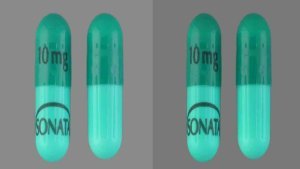
Sleep is one of the most fundamental pillars of human health. When it slips away night after night, the desperation for relief can lead many people toward prescription sleep aids like Sonata 10mg. It works fast, it works well — but a growing number of patients and caregivers are asking the same critical question: is Sonata 10mg addictive?
At Safe Health 247, we believe that informed patients make healthier decisions. This article takes a thorough, medically grounded look at Sonata (zaleplon), how it interacts with the brain, what the risks of dependency actually look like, and how you can use this medication responsibly without putting your long-term health at risk.
What is Sonata 10mg, and How Does It Work?
Sonata is the brand name for zaleplon, a non-benzodiazepine sedative-hypnotic drug that belongs to a class of medications commonly called “Z-drugs.” It is primarily prescribed for the short-term treatment of insomnia, particularly for patients who have difficulty falling asleep at the beginning of the night.
Unlike older sleeping pills, zaleplon has an exceptionally short half-life — roughly one hour. This means the drug is metabolized and largely cleared from the bloodstream within a few hours of ingestion, which is why it is sometimes prescribed specifically for people who wake in the middle of the night and need to fall back asleep without morning grogginess.
Sonata works by binding to GABA-A receptors in the brain, enhancing the effect of gamma-aminobutyric acid (GABA), the brain’s primary inhibitory neurotransmitter. In simple terms, it slows down brain activity in a targeted way that promotes sleep onset. At the 10mg dose, the effects are felt within 15 to 30 minutes, making it one of the fastest-acting sleep aids medications available by prescription.
Is Sonata 10mg classified as a Controlled Substance?
Yes — and this classification matters. The United States Drug Enforcement Administration (DEA) classifies zaleplon as a Schedule IV controlled substance. This designation is not arbitrary. It signals that while the drug has legitimate medical uses, it also carries a recognized potential for abuse, dependence, and addiction.
It is important to understand what “Schedule IV” means in a clinical context. These are medications that have a lower abuse potential compared to Schedule III substances but still require a prescription and careful monitoring. Other medications in this same category include benzodiazepines like lorazepam and alprazolam — drugs that are widely understood to carry dependency risks. Sonata sits in the same regulatory tier for a reason.

So, is Sonata 10mg addictive? The Honest Answer
The direct answer is yes — Sonata 10mg carries a real potential for addiction, particularly with prolonged or unsupervised use. However, addiction does not happen uniformly. The risk varies considerably depending on a person’s medical history, mental health background, dosage, and duration of use.
Zaleplon was originally marketed as a safer alternative to benzodiazepines, and in certain respects, it is. Its short half-life reduces hangover sedation and some of the accumulation effects seen with older drugs. But safer is not the same as safe. Research published in addiction medicine literature has consistently shown that Z-drugs, including zaleplon, eszopiclone, and zolpidem, can produce physical dependence, withdrawal symptoms, and compulsive drug-seeking behavior in vulnerable individuals.
The brain’s GABA system adapts over time to the presence of zaleplon. When the medication is taken regularly — even at the prescribed 10mg dose — the brain can begin to expect its presence and reduce its natural GABA output to compensate. This is the neurological foundation of physical dependence, and it can develop within just a few weeks of daily use.
Warning Signs That Sonata Use May Be Becoming Problematic
Recognizing the early signs of dependency is one of the most important things a patient or caregiver can do. At Safe Health 247, we encourage people to watch for the following patterns, which may indicate that Sonata use has moved beyond therapeutic into dependency territory.
One of the earliest signs is tolerance — the sensation that 10mg no longer produces the same effect it once did, leading a person to take higher doses or take the medication more frequently than prescribed. Another common marker is psychological preoccupation with the medication, where a person begins to feel anxious about not having access to it or starts planning their evenings around taking it.
Withdrawal symptoms are among the most telling indicators. If a person skips a dose and experiences rebound insomnia more severe than before they started the medication, along with symptoms like anxiety, sweating, trembling, or irritability, this suggests that physical dependence has developed. Continuing to use Sonata despite knowing it is causing harm to relationships, work performance, or health — is a hallmark sign of addiction.
Who Is at Higher Risk of Developing Sonata Dependency?
Not every person who takes Sonata 10mg will develop an addiction. However, certain factors elevate the risk in meaningful ways. People with a personal or family history of substance use disorder are considerably more vulnerable, as are individuals who struggle with anxiety, depression, or other mood disorders.
Those who self-medicate — using Sonata more frequently than prescribed, increasing the dose without medical supervision, or combining it with alcohol or other central nervous system depressants — face a significantly higher risk of dependency. Age is also a factor. Older adults metabolize zaleplon more slowly, which means the drug stays active in their systems longer, increasing both the sedative effect and the risk of adverse outcomes, including falls, cognitive impairment, and dependency.
Safe Use Guidelines for Sonata 10mg
The FDA and prescribing guidelines recommend that Sonata be used at the lowest effective dose for the shortest possible duration. Most clinical guidelines suggest that zaleplon should not be used for more than seven to ten consecutive days without a reassessment from a healthcare provider.
Patients should take Sonata only when they have a full four hours available to remain in bed, even though its half-life is short. The medication should never be combined with alcohol, opioids, or other sedatives, as the combination can dangerously suppress the central nervous system. It should also not be taken with a high-fat meal, as food slows zaleplon’s absorption and delays its effectiveness.
If a patient has been using Sonata regularly for more than a few weeks, it should not be stopped abruptly. A gradual tapering schedule, developed in partnership with a physician, is the safest way to discontinue the medication and minimize withdrawal effects.

Alternatives and Long-Term Solutions for Insomnia
Prescription sleep medication is often most appropriate as a bridge — a short-term solution while longer-term, sustainable strategies are developed. Cognitive Behavioral Therapy for Insomnia (CBT-I) is widely regarded by sleep medicine specialists as the most effective long-term treatment for chronic insomnia. It addresses the underlying thought patterns and behaviors that perpetuate poor sleep, without the risks associated with pharmacological intervention.
Other supportive strategies include sleep hygiene improvements, consistent sleep-wake schedules, light therapy, and stress reduction practices. For some patients, treating an underlying condition — such as anxiety, sleep apnea, or chronic pain — may resolve the insomnia without the need for ongoing medication.
Final Thoughts
Sonata 10mg medication is a genuinely effective medication for short-term insomnia, and for many patients it provides real, meaningful relief. But it is not without risk. The honest truth is that zaleplon carries a recognized potential for physical dependence and addiction, particularly when used beyond the recommended duration or without proper medical supervision.
At Safe Health 247, our mission is to help patients navigate these decisions with clarity and confidence. If you or someone you care about is using Sonata and is concerned about dependency, the most important step is an open and honest conversation with a qualified healthcare provider. You are not alone in this, and with the right support, there are paths forward that prioritize your long-term well-being over short-term relief.