Living with ADHD can feel like running a browser with a hundred tabs open simultaneously — and no way to close any of them. Attention slips, tasks pile up, and the simplest responsibilities become mountains. For millions of people worldwide, medication is not just a convenience; it is a lifeline. But not all medications work the same way, and when focus is urgently needed, fast-acting ADHD medication becomes a critical topic to understand thoroughly.
At Safe Health 247, we believe that every person deserves access to clear, accurate, and medically responsible health information. This article walks you through what fast-acting ADHD medications are, how they function in the brain, how quickly they take effect, and what you need to know before pursuing any treatment path.
Attention Deficit Hyperactivity Disorder (ADHD) is a neurodevelopmental condition that affects the brain’s executive functioning — the mental skills that help people plan, focus, remember instructions, and manage time. According to the American Psychiatric Association, ADHD affects approximately 8 to 10 percent of children and around 4 to 5 percent of adults globally, making it one of the most commonly diagnosed neurological conditions.
The reason onset speed matters so much in ADHD treatment is practical. A student who needs to sit through a two-hour exam, a professional preparing for an important presentation, or a parent managing a hectic morning routine does not have hours to wait for medication to begin working. Understanding which medications take effect quickly — and how to use them safely — can make a meaningful difference in daily quality of life.
What Qualifies as a Fast-Acting ADHD Medication?
In clinical terms, fast-acting ADHD medications are typically short-acting or immediate-release formulations that reach peak concentration in the bloodstream within one to two hours of ingestion. These are distinct from extended-release versions, which are engineered to deliver medication gradually over eight to twelve hours.
The two primary classes of fast-acting ADHD medication are stimulants and, in some cases, non-stimulants that have a relatively rapid onset. Stimulant medications remain the gold standard for ADHD treatment and are divided into two chemical families: amphetamine-based compounds and methylphenidate-based compounds. Both categories have immediate-release options that are widely recognized for their quick therapeutic effects.
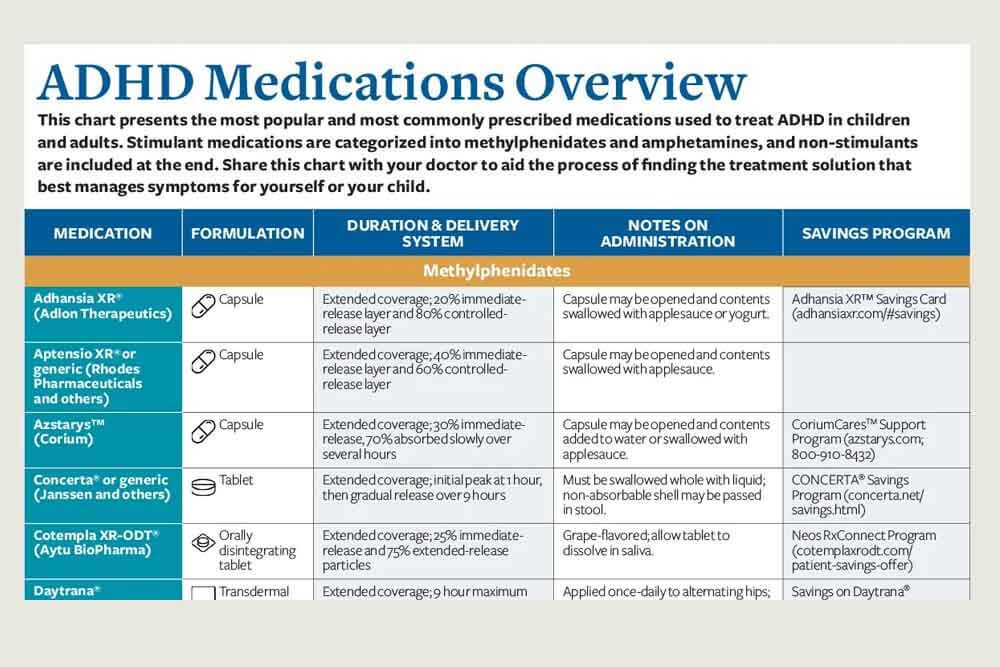
Methylphenidate-Based Immediate Release Medications
Methylphenidate is one of the oldest and most extensively studied ADHD treatments in the world. Immediate-release methylphenidate, marketed under brand names such as Ritalin IR and Methylin, typically begins working within 20 to 30 minutes of being taken orally. Its effects generally last between three and five hours, which makes it suitable for targeted, time-specific situations where focus is needed.
This medication works by blocking the reuptake of dopamine and norepinephrine in the brain. By keeping these neurotransmitters active in the synaptic space for longer periods, methylphenidate helps the brain’s prefrontal cortex — the region most responsible for attention, impulse control, and working memory — function more effectively. The result is often a noticeable improvement in concentration, reduced impulsivity, and greater task completion within the first hour of administration.
Amphetamine-Based Immediate Release Medications
The other major class of fast-acting ADHD medication includes amphetamine-based stimulants such as mixed amphetamine salts, commonly known as Adderall IR, and dextroamphetamine, sold under names like Dexedrine. These medications tend to take effect slightly more gradually than methylphenidate but still deliver a relatively rapid therapeutic onset — typically within 30 to 60 minutes.
Amphetamines work through a slightly different mechanism than methylphenidate. Rather than simply blocking reuptake, they also actively trigger the release of dopamine and norepinephrine from nerve terminals, creating a more pronounced increase in neurotransmitter activity. This dual mechanism tends to produce a stronger and sometimes longer-lasting effect even in immediate-release form, though it also means side effects can be more pronounced in sensitive individuals.
For many patients, the choice between methylphenidate and amphetamine-based medications comes down to individual neurochemistry, side effect tolerance, and duration needs — all factors that a licensed psychiatrist or physician is best positioned to evaluate.
Liquid and Chewable Formulations for Even Faster Absorption
For children or adults who have difficulty swallowing pills, liquid and chewable formulations of both methylphenidate and amphetamine salts are available. These forms may offer marginally faster absorption because they bypass the time required to dissolve a tablet in the stomach. Products such as Quillivant XR and Adzenys XR-ODT represent formulation innovations designed to offer both convenience and efficiency.
It is worth noting that while these formulations can begin acting slightly faster in some individuals, the clinical difference is often modest. What matters more is consistency — taking the medication at the same time each day, with or without food as directed, and monitoring how the body responds over time.
Non-Stimulant Options with Relatively Rapid Onset
While stimulants are the most commonly prescribed fast-acting ADHD medications, some patients cannot tolerate them due to cardiovascular concerns, anxiety medications, substance use history, or personal preference. In these cases, certain non-stimulant medications may offer quicker-than-expected therapeutic windows.
Viloxazine (Qelbree), a selective norepinephrine reuptake inhibitor approved by the FDA for ADHD, tends to show initial effects within one to two weeks of starting treatment, making it faster than traditional non-stimulants like atomoxetine (Strattera), which can take four to eight weeks to reach full efficacy. While neither qualifies as fast-acting in the same way stimulants do, viloxazine remains a viable option for patients who require a non-stimulant path with a shorter onset timeline.
Factors That Influence How Quickly ADHD Medication Works
No two people metabolize medication identically. The speed and intensity with which fast-acting ADHD medication works in any given individual is shaped by a combination of biological, behavioral, and environmental factors. Body weight loss products and metabolism play a role, as does the presence of food in the stomach at the time of ingestion — high-fat meals can delay the absorption of some stimulant formulations. Genetic variations in liver enzymes, particularly those in the CYP2D6 pathway, can cause some people to metabolize stimulants unusually quickly or slowly.
Age is another variable. Children often require weight-adjusted dosing that a pediatrician calculates carefully, while older adults may find that lower starting doses are better tolerated due to age-related changes in metabolism and cardiovascular sensitivity. Psychological state also matters — stress, anxiety, and sleep deprivation can all blunt the perceived effectiveness of even the most fast-acting ADHD medication.
Safety Considerations and the Importance of Medical Supervision
Fast-acting ADHD medications are prescription-only substances in most countries for good reason. While they are well-tolerated by the majority of patients when appropriately prescribed, they carry real risks if used without proper medical evaluation. Common side effects of stimulant medications include decreased appetite, difficulty falling asleep, elevated heart rate, and mild increases in blood pressure. In rare cases, stimulants can exacerbate underlying cardiac conditions or contribute to anxiety and mood instability.
It is critical that any individual considering ADHD medication undergoes a thorough assessment by a licensed healthcare provider. This includes a review of cardiovascular history, mental health background, any co-occurring conditions, and a full medication review to screen for drug interactions. Self-medicating with stimulants obtained outside legitimate medical channels is not only dangerous but illegal in most jurisdictions.
At Safe Health 247, we strongly advocate for transparent, provider-guided treatment decisions. Our platform is designed to support informed conversations between patients and their healthcare teams — not to replace them.

Combining Fast-Acting Medication with Behavioral Strategies
Research consistently shows that medication alone is rarely the complete answer for ADHD management. The most effective treatment plans combine fast-acting ADHD medication with behavioral therapy, structured routines, cognitive strategies, and, where appropriate, psychoeducation for both the patient and their family. Cognitive behavioral therapy tailored to ADHD has been shown to improve executive function skills, emotional regulation, and long-term coping in ways that medication alone cannot achieve.
The medication provides a neurological window of opportunity. What happens inside that window — the habits formed, the strategies practiced, the self-awareness developed — determines how transformative treatment ultimately becomes. A fast-acting medication can open a door; it takes consistent effort and support to walk through it.
Final Thoughts
Fast-acting ADHD medication has genuinely changed lives. For people who have spent years struggling with an unseen neurological challenge, the clarity that arrives within 30 minutes of a properly prescribed stimulant can feel nothing short of remarkable. It is not a character fix — it is a brain chemistry adjustment that allows the real person underneath the noise to show up fully.
But medication is a tool, and like any tool, its value depends entirely on how it is used. Understanding the options, respecting the risks, working closely with a qualified provider, and pairing pharmaceutical treatment with lifestyle and behavioral strategies is the comprehensive path that Safe Health 247 endorses and encourages.
If you or someone you care about is navigating an ADHD diagnosis and wondering where to begin, start with a conversation with a doctor, a psychiatrist, or a trusted health resource. Safe Health 247 is here to be part of that conversation, offering evidence-aligned, reader-first guidance every step of the way.