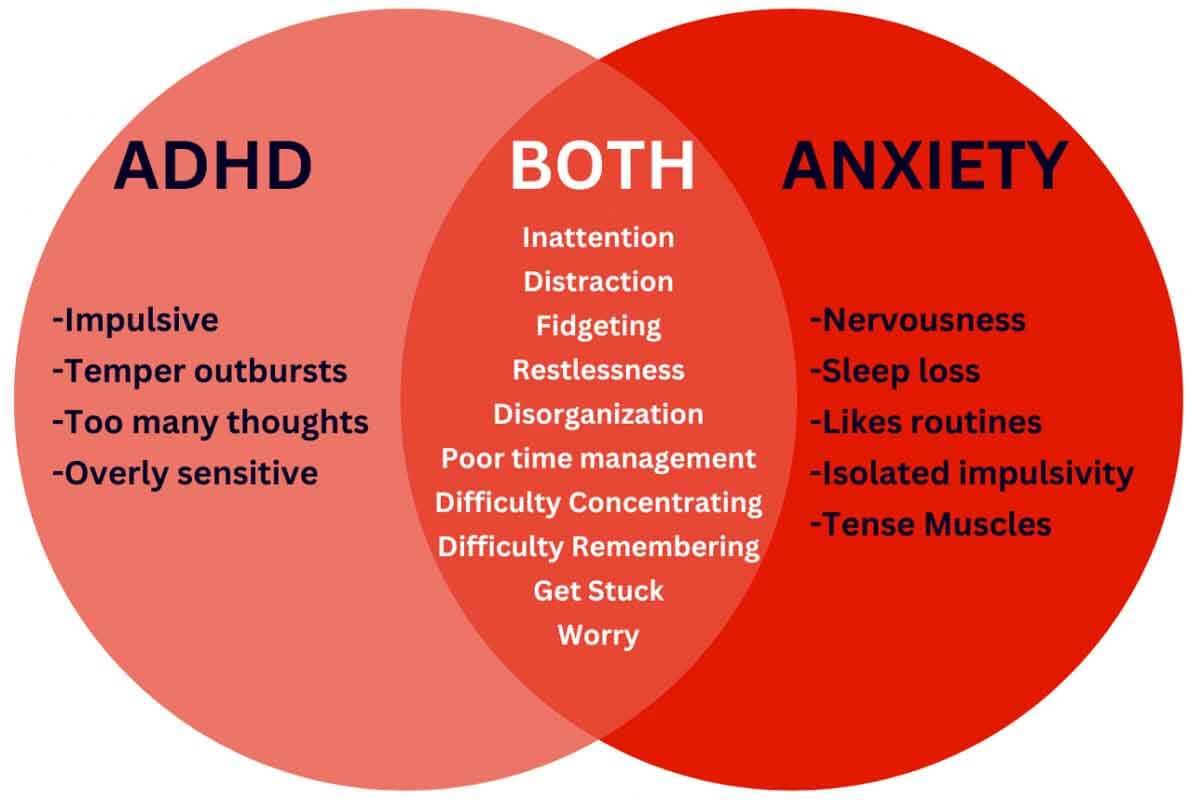
Living with a restless mind is exhausting — and it becomes even more frustrating when no one can seem to agree on what is actually going on inside your head. Two of the most commonly misidentified mental health conditions today are ADHD and anxiety. Both can make you feel overwhelmed, distracted, and emotionally drained. Yet they are fundamentally different in their origin, presentation, and treatment. At Safe Health 247, we believe that understanding the ADHD vs anxiety difference is not just a medical exercise — it is a life-changing step toward getting the right help.
What Is ADHD and Why Does It Get Misdiagnosed?
Attention-Deficit/Hyperactivity Disorder, widely known as ADHD, is a neurodevelopmental condition that affects how the brain regulates attention, impulse control, and activity levels. It is not simply a childhood phase or a matter of laziness. ADHD is rooted in neurological differences, particularly in the way dopamine and norepinephrine — two critical brain chemicals — function in the prefrontal cortex.
People with ADHD often struggle to sustain focus on tasks that do not provide immediate stimulation. They may jump between thoughts, forget important appointments, interrupt conversations without intending to, or feel an almost physical restlessness that is impossible to ignore. What makes ADHD particularly tricky is that these symptoms do not always look the same from person to person. Some individuals present with hyperactive and impulsive traits, while others experience a quieter, more inward form known as inattentive-type ADHD, which is especially common in women and girls and goes undetected for years.
The reason ADHD gets misdiagnosed so frequently is that its outward behaviors can closely mirror those of anxiety. A person who cannot concentrate at work might be assumed to be nervous or stressed. A teenager who stares blankly during class might be labeled as having test anxiety. Without a thorough clinical evaluation, these distinctions are easy to miss.
What Is Anxiety and How Does It Affect Daily Life?
Anxiety, in its clinical form, refers to a group of disorders characterized by persistent, excessive worry and fear that significantly impairs a person’s daily functioning. Unlike the normal stress we all experience before a job interview or a difficult conversation, clinical anxiety is chronic. It does not pass when the stressful event ends. It lingers, expands, and often becomes a defining filter through which a person sees the entire world.
Generalized Anxiety Disorder (GAD) is perhaps the most well-known form, marked by continuous, uncontrollable worry about a wide range of everyday situations. Other forms include social anxiety disorder, panic disorder, and specific phobias. What ties them all together is the underlying mechanism of the brain’s threat-response system being persistently overactivated.
People living with anxiety frequently experience physical symptoms alongside the mental ones. Racing heart, muscle tension, shallow breathing, stomach discomfort, and insomnia are all common companions to anxious thinking. The mind is not wandering because it is bored — it is spinning because it genuinely believes danger is near, even when the environment is completely safe.

The Core ADHD vs Anxiety Difference: Where They Diverge
The single most important distinction between ADHD and anxiety comes down to the source of the mental disruption. This is where the ADHD vs anxiety difference becomes clinically significant.
In ADHD, the inability to focus stems from a brain that struggles to regulate attention as a baseline neurological trait. Distractibility is not caused by fear — it is caused by how the brain is wired. A person with ADHD medications might lose track of a conversation not because they are worried about something, but simply because a more stimulating thought pulled their attention away without warning.
In anxiety, the inability to concentrate is a symptom of excessive worry. The mind is not wandering freely — it is trapped in a loop of worst-case scenarios. A student with anxiety cannot finish reading a paragraph because their brain keeps redirecting them back to the fear of failing the exam, disappointing their parents, or losing their scholarship. The distraction has a very specific emotional fuel source: fear.
Another meaningful difference lies in how each condition responds to stress. People with ADHD often perform better under pressure when the urgency provides the stimulation their brain craves. Deadlines, high-stakes tasks, and novel challenges can paradoxically sharpen focus in someone with ADHD. In contrast, people with anxiety tend to shut down or spiral further under pressure. The stakes make the fear louder, not quieter.
Sleep is another telling factor. Many individuals with ADHD struggle to fall asleep because their brain refuses to slow down at night — there is always one more thought, one more idea, one more mental detour. People with anti anxiety medications experience sleep difficulties, but the cause is different. They lie awake not because their mind is stimulated, but because it is consumed by worry, rehearsing difficult conversations, or catastrophizing about tomorrow.
Can Someone Have Both ADHD and Anxiety?
Absolutely — and this is far more common than most people realize. Research suggests that nearly 50 percent of adults diagnosed with ADHD also meet the criteria for an anxiety disorder. This co-occurrence, known as comorbidity, makes both conditions harder to identify individually and significantly more challenging to treat.
When ADHD and anxiety exist together, symptoms can amplify each other in confusing ways. The impulsivity of ADHD can generate real-world consequences — missed deadlines, forgotten commitments, social missteps — that then become legitimate triggers for anxiety. Meanwhile, anxiety can mask ADHD by making a person appear overly cautious, overthinking, or avoidant rather than impulsive and scattered.
This overlap is precisely why self-diagnosis is inadequate and potentially harmful. A licensed mental health professional or psychiatrist is trained to untangle these presentations through structured clinical interviews, standardized rating scales, and a thorough personal and family history.
How Are ADHD and Anxiety Treated Differently?
Treatment approaches for these two conditions differ in important ways, which further underscores why getting the correct diagnosis matters so much.
ADHD is most effectively managed through a combination of stimulant medications — such as amphetamine-based or methylphenidate-based drugs — alongside behavioral therapy, organizational coaching, and lifestyle modifications. Non-stimulant options are also available for individuals who do not tolerate stimulants well. These medications work by increasing dopamine availability in the brain, helping the prefrontal cortex regulate attention more effectively.
Anxiety disorders respond well to selective serotonin reuptake inhibitors (SSRIs) and serotonin-norepinephrine reuptake inhibitors (SNRIs), along with structured psychotherapy approaches such as Cognitive Behavioral Therapy (CBT). CBT is particularly effective because it directly targets the distorted thought patterns that drive anxious responses.
Interestingly, stimulant medications used for ADHD can sometimes worsen anxiety symptoms. This is one key reason why treating comorbid cases requires a careful, individualized approach guided by an experienced clinician rather than a one-size-fits-all protocol.

When Should You Seek Professional Help?
If you or someone you love has been struggling with concentration, persistent worry, emotional dysregulation, or a constant sense of inner chaos, it is time to speak with a qualified healthcare provider. Neither ADHD nor anxiety is a character flaw. Both are recognized medical conditions with evidence-based treatments that genuinely improve quality of life.
At Safe Health 247, we encourage you to trust your instincts. If something feels consistently off — if you are losing hours to a spiral of anxious thoughts or cannot hold a task together no matter how hard you try — that experience deserves clinical attention, not dismissal.
Final Thoughts
The ADHD vs anxiety difference is subtle on the surface but profound in its implications. One condition reflects a brain wired differently from the start; the other reflects a nervous system locked in a state of chronic alarm. Both are real, both are serious, and both deserve compassionate, informed care.
As a writer who has spent years studying mental health communication, I have come to believe that the most powerful thing any health platform can do is make complex medical distinctions accessible to everyday people. That is what Safe Health 247 stands for — not replacing your doctor, but empowering you to walk into that appointment with clarity, confidence, and the right questions.
Understanding the difference between ADHD and anxiety is not the end of your journey. It is the beginning of it.